Text Only Off

The VICC.ORG Directory of Doctors, Healthcare Providers & Researchers

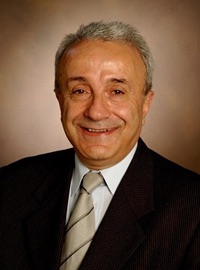
John D. Boice, Jr., Sc.D.

Professor, School of Medicine
VICC Member
Cancer Epidemiologist

Contact Information:

International Epidemiology Institute
1455 Research Blvd.; Suite 550
Rockville, MD 20850
301-424-1054

Profile

John Boice is professor of Medicine at Vanderbilt University School of Medicine and scientific director of the International Epidemiology Institute (IEI), a biomedical research firm with offices in Rockville, Md., and Jacksonville, Fla., involved in the design, conduct and analysis of epidemiologic studies into the causes of cancer and other diseases.
Read more ....

John Boice is professor of Medicine at Vanderbilt University School of Medicine and scientific director of the International Epidemiology Institute (IEI), a biomedical research firm with offices in Rockville, Md., and Jacksonville, Fla., involved in the design, conduct and analysis of epidemiologic studies into the causes of cancer and other diseases.  He is an international authority on radiation effects and currently serves on the Main Commission of the International Commission on Radiological Protection, the US delegation to the United Nations Scientific Committee on the Effects of Atomic Radiation, and the US Congressionally mandated Veterans' Advisory Board on Dose Reconstruction. He is a Distinguished Emeritus Member of the National Council on Radiation Protection and Measurements.

During 27 years of service in the US Public Health Service, Boice developed and became the first chief of the Radiation Epidemiology Branch at the National Cancer Institute (NCI). Boice has established programs of research in all major areas of radiation epidemiology, with major projects dealing with populations exposed to medical, occupational, military, and environmental radiation. These research efforts have aimed at clarifying cancer and other health risks associated with exposure to ionizing radiation, especially at low dose levels. Boice's seminal discoveries and over 420 publications have been used to formulate public health measures to reduce population exposure to radiation and prevent radiation associated diseases.

In March 2010, he delivered the Elis Berven Lecture at the Swedish Society of Oncology in Kalmar, Sweden on "Epidemiologic studies of second cancers following radiotherapy."

In 2009, Boice delivered the Lauriston Taylor Lecture at the National Council on Radiation and Protection and Measurements’ annual meeting and the Fessinger-Springer Lecture at the University of Texas at El Paso. In 2008, Boice received the Harvard School of Public Health Alumni Award of Merit. He has also received the E.O. Lawrence Award from the Department of Energy    an honor bestowed on Richard Feynman and Murry Gell Mann among others and the Gorgas Medal from the Association of Military Surgeons of the United States.  In 1999 he received the outstanding alumnus award from the University of Texas at El Paso (formerly Texas Western College).

Boice has a bachelor’s degree in Physics from Texas Western College (now the University of Texas at El Paso) and a master’s degree in Nuclear Engineering from Rensselaer Polytechnic Institute.  He received a master’s degree in Medical Physics at Harvard and also a doctoral degree in Epidemiology at Harvard.

He currently directs the Genetic Consequences of Cancer Treatment study, supported by the NCI, the largest epidemiologic study yet undertaken to assess the possible risks of adverse pregnancy outcomes (malformation, neonatal death, stillbirth, cancer) related to the curative treatments received by cancer survivors who are able to become pregnant. In cooperation with the Department of Defense and the Department of Veterans Affairs, Boice recently initiated an NCI-funded study of atomic veterans who participated in any of the 230 atmospheric nuclear weapons tests between 1946 and 1958 at the Nevada Test Site or the Pacific Proving to examine the lifetime risk of cancer following relatively low-dose exposures received gradually over time.