The VICC.ORG Directory of Doctors, Healthcare Providers & Researchers
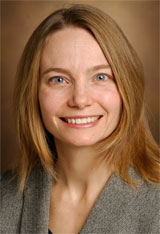
Elizabeth Yang, M.D., Ph.D.
Associate Professor of Pediatrics, Cancer Biology, and Cell & Developmental Biology
VICC Member
Pediatric Hematologist/Oncologist
- Appointments
615-936-1762
Physicians: 1-877-936-8422 - Clinical Trials Information
- Clinical Trials: 1-800-811-8480
- Online Self-Referral Form
- Other Telephone NumbersMonroe Carell Jr. Children's Hospital at Vanderbilt
615-936-1000
Office
615-936-3585 - Faxes
- AddressesMonroe Carell Jr. Children's Hospital at Vanderbilt
2200 Children's Way
Nashville, TN 37232
Website
Office
Vanderbilt University Medical Center
518 Preston Building
Nashville, TN 37232-6838
Profile
Dr. Yang was trained in Pediatrics at Massachusetts General Hospital and in Pediatric Hematology-Oncology at Washington University. She has been involved in cancer-related research at Stanford and at Washington University. She joined Vanderbilt University in 1997 as a member of the Vanderbilt-Ingram Cancer Center.
Read more ....
Dr. Yang was trained in Pediatrics at Massachusetts General Hospital and in Pediatric Hematology-Oncology at Washington University. She has been involved in cancer-related research at Stanford and at Washington University. She joined Vanderbilt University in 1997 as a member of the Vanderbilt-Ingram Cancer Center. As a physician-scientist, Dr. Yang is active on the Vanderbilt Pediatric Hematology-Oncology clinical service and is committed to cancer research. Her research focus is the molecular mechanisms of apoptosis, or programmed cell death, an important regulatory pathway in cancer. BCL2 is an oncogene which causes cancer by inhibiting cell death and promoting inappropriate cell survival. In studying how the BCL2 family controls cell proliferation, Dr. Yang's laboratory has found that apoptosis and cell cycle are coordinately controlled. The function of many key apoptosis proteins is regulated by phosphorylation. Dr. Yang's group also investigates the complex interactions between specific serine/threonine phosphatases, the phospho-binding protein 14-3-3, and the BCL2 family in regulating apoptosis. Elucidating the basic mechanisms of cell death will enhance understanding of cancer pathogenesis and lead to potential novel cancer therapies.
Education
- M.D. - Stanford University, 1987
- Ph.D - Stanford University, 1987
- Pediatric Residency - Massachusetts General Hospital
- Pediatric Hematology-Oncology Fellowship, Washington University, St. Louis MO.
- Post-Doctoral Research Fellowship, Washington University, St. Louis, MO
Research Description
We have 3 areas of interest. First is how the BCL2 family of apoptosis molecules regulate cell cycle. We found that the pro-apoptotic BCL2 family members BAX and BAK regulate p27 level and reactive oxygen species, and knockout of BAX and BAK result in quiescence. We are interested in how BAX and BAK deletion decreases intracellular ROS and causes the quiescence phenotype.
Second, the oncogenic protein tyrosine phosphatase Shp2 functions both in apoptosis and proliferation. Mutations of this gene are found in human leukemias. When found in the germline, Shp2 mutations predispose to leukemia. We use retroviral gene transduction and bone marrow reconstitution to study cooperating events in Shp2 murine leukemogenesis.
Third, any apoptotic molecules are regulated by reversible phosphorylation. We identified a PP2A as the enzyme dephosphorylating the transcription factor FOXO1 in response to an apoptotic stimulus through complex competitive interactions with 14-3-3. We are elucidating the regulation of the PP2A phosphatase.
Clinical Interest
Sickle Cell disease
hemoglobinopathies
Clinical Research Description
Sickle cell disease is a single gene disease, but with variable clinical severity. We are interested in genetic modifiers of disease expressivity.
Publications
- Cui, Q, Valentin, M, Janumyan, Y, Yang, E Bax-/- bak-/- cells exhibit p27 Thr198 phosphorylation and autophagy. Autophagy, 5(2), 263-4, 2009.
- Prasad, P, Kant, JA, Wills, M, O''Leary, M, Lovvorn, H, Yang, E Loss of heterozygosity of succinate dehydrogenase B mutation by direct sequencing in synchronous paragangliomas. Cancer Genet Cytogenet, 192(2), 82-5, 2009.
- Valentin, M, Yang, E Autophagy is activated, but is not required for the G0 function of BCL-2 or BCL-xL. Cell Cycle, 7(17), 2762-8, 2008.
- Janumyan, Y, Cui, Q, Yan, L, Sansam, CG, Vanlentin, M, Yang, E G0 function of BCL2 and BCL-xL requires BAX, BAK, and p27 phosphorylation by Mirk, revealing a novel role of BAX and BAK in quiescence regulation. J Biol Chem, 2008.
- Yan, L, Lavin, VA, Moser, LR, Cui, Q, Kanies, C, Yang, E PP2A regulates the pro-apoptotic activity of FOXO1. J Biol Chem, 283(12), 7411-20, 2008.
- Lavin, VA, Hamid, R, Patterson, J, Alford, C, Ho, R, Yang, E Use of human androgen receptor gene analysis to aid the diagnosis of JMML in female noonan syndrome patients. Pediatr Blood Cancer, 51(2), 298-302, 2008.
- Zinkel, S, Gross, A, Yang, E BCL2 family in DNA damage and cell cycle control. Cell Death Differ, 2006.
- Cheng N, Janumyan YM, Didion L, Van Hofwegen C, Yang E, Knudson CM Bcl-2 inhibition of T-cell proliferation is related to prolonged T-cell survival.. Oncogene, 23(21), 3770-3780, 2004.
- Janumyan, Yelena M, Sansam, Courtney G, Chattopadhyay, Anuja, Cheng, Ningli, Soucie, Erinn L, Penn, Linda Z, Andrews, David, Knudson, C Michael, Yang, Elizabeth Bcl-xL/Bcl-2 coordinately regulates apoptosis, cell cycle arrest and cell cycle entry. EMBO J, 22(20), 5459-70, 2003.
- Chiang, Chi-Wu, Kanies, Cindy, Kim, Kwang Woon, Fang, Wei Bin, Parkhurst, Christina, Xie, Minhui, Henry, Travis, Yang, Elizabeth Protein phosphatase 2A dephosphorylation of phosphoserine 112 plays the gatekeeper role for BAD-mediated apoptosis. Mol Cell Biol, 23(18), 6350-62, 2003.
- Irvin, Brenda J, Wood, Lauren D, Wang, Lilin, Fenrick, Randy, Sansam, Courtney G, Packham, Graham, Kinch, Michael, Yang, Elizabeth, Hiebert, Scott W TEL, a putative tumor suppressor, induces apoptosis and represses transcription of Bcl-XL. J Biol Chem, 278(47), 46378-86, 2003.
- Greider, Courtney, Chattopadhyay, Anuja, Parkhurst, Christina, Yang, Elizabeth BCL-x(L) and BCL2 delay Myc-induced cell cycle entry through elevation of p27 and inhibition of G1 cyclin-dependent kinases. Oncogene, 217765-75, 2002.
- Chattopadhyay, A, Chiang, C W, Yang, E BAD/BCL-[X(L)] heterodimerization leads to bypass of G0/G1 arrest. Oncogene, 20(33), 4507-18, 2001.
- Chiang, C W, Harris, G, Ellig, C, Masters, S C, Subramanian, R, Shenolikar, S, Wadzinski, B E, Yang, E Protein phosphatase 2A activates the proapoptotic function of BAD in interleukin- 3-dependent lymphoid cells by a mechanism requiring 14-3-3 dissociation. Blood, 97(5), 1289-97, 2001.
- Chen G, Branton PE, Yang E, Korsmeyer SJ, Shore GC "Adenovirus E1B 19 kDa death suppressor protein interacts with BAX but not with BAD." J Biol Chem, 27124221-24225, 1996.
- Yang, E., and Korsmeyer, S.J "Molecular Thanatopsis: a discourse on the BCL2 family and cell death." Blood, 88386-401, 1996.
- Zha, J., Harada, H,, Yang, E., Jockel, J., Korsmeyer, SJ "Serine phosphorylation of death agonist BAD in response to survival factor results in binding to 14-3-3 not BCL-XL." Cell, 87619-628, 1996.
- Yang, E., Zha, J., Jockel, J., Korsmeyer. S.J "Bad: a heterodimeric partner of Bcl-xL and Bcl-2, displaces Bax and promotes cell death." Cell, 80285-291, 1995.
- Domer PH, Head DR, Renganathan N, Raimondi SC, Yang E, Atlas M "Molecular analysis of 13 cases of MLL/11q23 secondary acute leukemia and identification of topoisomerase II consensus-binding sequences near the chromosomal breakpoint of a secondary leukemia with the t(4;11)." Leukemia, 91305-1312, 1995.
- Sedlak, T.W., Oltvai, Z.N., Yang, E., Wang, K., Boise, L.H., Thompson, C.B., Korsmeyer, S.J "Multiple Bcl-2 family members demonstrate selective dimerizations with Bax." PNAS, 927834-7838, 1995.
- Silverman GA, Yang E, Profitt JH, Zutter M, Korsmeyer SJ "Genetic transfer and expression of reconstructed yeast artificial chromosomes containing normal and translocated Bcl-2 proto-oncogenes." Mol Cell Biol , 135469-5478, 1993.
- Friedberg EC, Cooper JA, Couto L, Fleer R, Kalainov D, Naumovski L, Nicolet CM, Rehm J, Robinson GW, Ryu BH, Sugino A, Sugino T, Weiss WA, Yang E "Recent Advances in the Characterization of Genes and Proteins for Nucleotide Excision Repair in the Yeast Saccharomyces cerevisiae." Photobiochem Photobiophys Suppl, 333-341, 1987.
- Friedberg EC, Fleer R, Naumovski L, Nicolet CM, Robinson GR, Weiss WA, Yang E "Nucleotide Excision Repair Genes from Yeast Saccharomyces cerevisiae." In , 231-242, 1986.
- Yang E, Friedberg EC "The Molecular cloning and nucleotide sequence analysis of the RAD1 gene of Saccharomyces cerevisiae." Mol Cell Biol , 42161, 1984.
- Friedberg EC, Naumovski L, Yang E, Pure G, Schultz RA, Love JD "Approaching the Biochemistry of Excision Repair in Eukaryotic Cells: The Use of Cloned Genes from Saccharomyces cerevisiae.." In "Cellular Responses to DNA Damage," (EC Friedberg, BA Bridges, eds) Alan R Liss & Co Inc, New York, 62, 1983.
You do not have JavaScript enabled. This site works better with JavaScript turned on.