The VICC.ORG Directory of Doctors, Healthcare Providers & Researchers
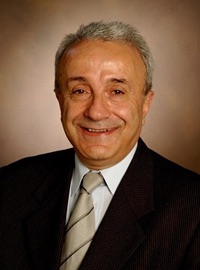
Ethan Lee, M.D., Ph.D.
Assistant Professor of Cell and Development Biology
VICC Member
Researcher
Contact Information:
Vanderbilt University Medical Center
1161 21st Ave, U-4225 Learned Lab
Nashville , TN 37232-2175
615-322-1307
Fax: 615-343-4539
Research Specialty
Mechanism of Wnt signal transduction in development and disease
Research Description
BACKGROUND
The Wnt pathway is an evolutionarily conserved signaling pathway present in all metazoans. During development, Wnt signaling coordinate the formation of tissues, organs, and limbs, and its misregulation leads to a variety of human disease states such Alzheimer�s disease and cancer. My laboratory is interested in understanding the basic mechanism by which a Wnt signal is propagated and how this information can be used in regenerative medicine and in the treatment of cancer.
EXPERIMENTAL APPROACHES
A major experimental approach in my laboratory involves the use of Xenopus extracts and purified proteins to biochemically reconstitute Wnt signaling in vitro. Genome-scale screens, cultured mammalian cells, Xenopus embryos, Drosophila genetics (in collaboration with Dr. Laura Lee), and mouse studies are employed to compliment and extend our biochemical findings.
MECHANISM OF WNT SIGNAL TRANSDUCTION
One of the major mysteries of this pathway is how a Wnt signal is propagated from the cell surface. My laboratory has recently developed an in vitro system to study the mechanism of Wnt signal transduction from the plasma membrane. Towards this end, we have focused on understanding the mechanism of signaling from the coreceptor, LRP6, and the potential role of the membrane associated heterotrimeric G protein family members in Wnt signal transduction. Many components of the Wnt pathway are regulated by ubiquitin-mediated proteolysis. Recently, we have taken a genome-scale screen to identify deubiquitinating enzyme (DUBs) and ubiquitin ligases (E3s) that regulate the Wnt pathway. Several �hits� have been identified from these screens, and current efforts are directed towards validating their roles in Wnt signaling.
REGENERATIVE MEDICINE AND CANCER
In regenerative medicine, the healing process is manipulated to repair damaged tissues. Modern regenerative medicine is a field in which stem cells are manipulated to treat a variety of human diseases. Wnt signaling is one of a handful of molecular pathways critical to stem cells. Thus, agents that target Wnt signaling would be potentially useful for the treatment of cardiovascular disease, diabetes, neurodegeneration, and other disorders that may benefit from regenerative medicine.
Cancer stem cells (CSC) are fundamental to the initiation and maintenance of tumors. Failure to eradicate CSC (as is typical with conventional therapy) leaves behind a small reservoir of cells that drives relapse. Wnt inhibitors would be expected to specifically target this resistant CSC population. Using our Xenopus biochemical system, we have found several compounds that potently inhibit the Wnt pathway. One of these, VU-WS30, inhibits the viability of a variety of cancer cell lines that are highly dependent on Wnt signaling for growth and proliferation. Current efforts are directed towards identifying the molecular targets of VU-WS30 and other Wnt inhibitors identified in our screen.
Publications
- Jodoin, JN, Shboul, M, Sitaram, P, Zein-Sabatto, H, Reversade, B, Lee, E, Lee, LA Human Asunder promotes dynein recruitment and centrosomal tethering to the nucleus at mitotic entry. Mol Biol Cell, 23(24), 4713-24, 2012.
- Sitaram, P, Anderson, MA, Jodoin, JN, Lee, E, Lee, LA Regulation of dynein localization and centrosome positioning by Lis-1 and asunder during Drosophila spermatogenesis. Development, 139(16), 2945-54, 2012.
- Hang, BI, Thorne, CA, Robbins, DJ, Huppert, SS, Lee, LA, Lee, E Screening for small molecule inhibitors of embryonic pathways: sometimes you gotta crack a few eggs. Bioorg Med Chem, 20(6), 1869-77, 2012.
- Saito-Diaz, K, Chen, TW, Wang, X, Thorne, CA, Wallace, HA, Page-McCaw, A, Lee, E The way Wnt works: Components and mechanism. Growth Factors, 2012.
- Hanson, AJ, Wallace, HA, Freeman, TJ, Beauchamp, RD, Lee, LA, Lee, E XIAP monoubiquitylates Groucho/TLE to promote canonical Wnt signaling. Mol Cell, 45(5), 619-28, 2012.
- Thorne, CA, Lafleur, B, Lewis, M, Hanson, AJ, Jernigan, KK, Weaver, DC, Huppert, KA, Chen, TW, Wichaidit, C, Cselenyi, CS, Tahinci, E, Meyers, KC, Waskow, E, Orton, D, Salic, A, Lee, LA, Robbins, DJ, Huppert, SS, Lee, E A biochemical screen for identification of small-molecule regulators of the Wnt pathway using Xenopus egg extracts. J Biomol Screen, 16(9), 995-1006, 2011.
- Jernigan, KK, Cselenyi, CS, Thorne, CA, Hanson, AJ, Tahinci, E, Hajicek, N, Oldham, WM, Lee, LA, Hamm, HE, Hepler, JR, Kozasa, T, Linder, ME, Lee, E Gbetagamma activates GSK3 to promote LRP6-mediated beta-catenin transcriptional activity. Sci Signal, 3(121), ra37, 2010.
- Speirs, CK, Jernigan, KK, Kim, SH, Cha, YI, Lin, F, Sepich, DS, DuBois, RN, Lee, E, Solnica-Krezel, L Prostaglandin Gbetagamma signaling stimulates gastrulation movements by limiting cell adhesion through Snai1a stabilization. Development, 137(8), 1327-37, 2010.
- Saraswati, S, Alfaro, MP, Thorne, CA, Atkinson, J, Lee, E, Young, PP Pyrvinium, a Potent Small Molecule Wnt Inhibitor, Promotes Wound Repair and Post-MI Cardiac Remodeling. PLoS One, 5(11), e15521, 2010.
- Thorne, CA, Hanson, AJ, Schneider, J, Tahinci, E, Orton, D, Cselenyi, CS, Jernigan, KK, Meyers, KC, Hang, BI, Waterson, AG, Kim, K, Melancon, B, Ghidu, VP, Sulikowski, GA, LaFleur, B, Salic, A, Lee, LA, Miller, DM, Lee, E Small-molecule inhibition of Wnt signaling through activation of casein kinase 1α. Nat Chem Biol, 6(11), 829-36, 2010.
- Alfaro, MP, Vincent, A, Saraswati, S, Thorne, CA, Hong, CC, Lee, E, Young, PP sFRP2 suppression of bone morphogenic protein (BMP) and Wnt signaling mediates mesenchymal stem cell (MSC) self-renewal promoting engraftment and myocardial repair. J Biol Chem, 285(46), 35645-53, 2010.
- Anderson, MA, Jodoin, JN, Lee, E, Hales, KG, Hays, TS, Lee, LA Asunder is a critical regulator of dynein-dynactin localization during Drosophila spermatogenesis. Mol Biol Cell, 20(11), 2709-21, 2009.
- Barton, CE, Tahinci, E, Barbieri, CE, Johnson, KN, Hanson, AJ, Jernigan, KK, Chen, TW, Lee, E, Pietenpol, JA DeltaNp63 antagonizes p53 to regulate mesoderm induction in Xenopus laevis. Dev Biol, 329(1), 130-9, 2009.
- Merkle, JA, Rickmyre, JL, Garg, A, Loggins, EB, Jodoin, JN, Lee, E, Wu, LP, Lee, LA no poles encodes a predicted E3 ubiquitin ligase required for early embryonic development of Drosophila. Development, 136(3), 449-59, 2009.
- Cselenyi, CS, Lee, E Context-dependent activation or inhibition of Wnt-beta-catenin signaling by Kremen. Sci Signal, 1(8), pe10, 2008.
- Cselenyi, CS, Jernigan, KK, Tahinci, E, Thorne, CA, Lee, LA, Lee, E LRP6 transduces a canonical Wnt signal independently of Axin degradation by inhibiting GSK3''s phosphorylation of {beta}-catenin. Proc Natl Acad Sci U S A, 2008.
- Alfaro, MP, Pagni, M, Vincent, A, Atkinson, J, Hill, MF, Cates, J, Davidson, JM, Rottman, J, Lee, E, Young, PP The Wnt modulator sFRP2 enhances mesenchymal stem cell engraftment, granulation tissue formation and myocardial repair. Proc Natl Acad Sci U S A, 105(47), 18366-71, 2008.
- Tahinci, E, Thorne, CA, Franklin, JL, Salic, A, Christian, KM, Lee, LA, Coffey, RJ, Lee, E Lrp6 is required for convergent extension during Xenopus gastrulation. Development, 134(22), 4095-106, 2007.
- Moore, AC, Amann, JM, Williams, CS, Tahinci, E, Farmer, TE, Martinez, JA, Yang, G, Luce, KS, Lee, E, Hiebert, SW Myeloid Translocation Gene Family Members Associate with TCFs and Influence TCF-Dependent Transcription. Mol Cell Biol, 2007.
- Rickmyre, JL, Dasgupta, S, Ooi, DL, Keel, J, Lee, E, Kirschner, MW, Waddell, S, Lee, LA The Drosophila homolog of MCPH1, a human microcephaly gene, is required for genomic stability in the early embryo. J Cell Sci, 120(Pt 20), 3565-77, 2007.
- Lee, Laura A, Lee, Ethan, Anderson, Michael A, Vardy, Leah, Tahinci, Emilios, Ali, Siraj M, Kashevsky, Helena, Benasutti, Matt, Kirschner, Marc W, Orr-Weaver, Terry L Drosophila Genome-Scale Screen for PAN GU Kinase Substrates Identifies Mat89Bb as a Cell Cycle Regulator. Dev Cell, 8(3), 435-42, 2005.
- Ivanovska, Irena, Lee, Ethan, Kwan, Kristen M, Fenger, Douglas D, Orr-Weaver, Terry L The Drosophila MOS Ortholog Is Not Essential for Meiosis. Curr Biol, 14(1), 75-80, 2004.
- Tahinci, Emilios, Lee, Ethan The interface between cell and developmental biology. Curr Opin Genet Dev, 14(4), 361-6, 2004.
- Lee, Ethan, Salic, Adrian, Krüger, Roland, Heinrich, Reinhart, Kirschner, Marc W The Roles of APC and Axin Derived from Experimental and Theoretical Analysis of the Wnt Pathway. PLoS Biol, 1(1), E10, 2003.
- Pfleger, C M, Salic, A, Lee, E, Kirschner, M W Inhibition of Cdh1-APC by the MAD2-related protein MAD2L2: a novel mechanism for regulating Cdh1.. Genes Dev, 15(14), 1759-64, 2001.
- Lee, E, Salic, A, Kirschner, M W Physiological regulation of [beta]-catenin stability by Tcf3 and CK1epsilon. J Cell Biol, 154(5), 983-93, 2001.
- Pfleger, C M, Lee, E, Kirschner, M W, Substrate recognition by the Cdc20 and Cdh1 components of the anaphase-promoting complex.. Genes Dev, 152396-407, 2001.
- Salic, A, Lee, E, Mayer, L, Kirschner, M W Control of beta-catenin stability: reconstitution of the cytoplasmic steps of the wnt pathway in Xenopus egg extracts. Mol Cell, 5(3), 523-32, 2000.
- Berghuis, A M, Lee, E, Raw, A S, Gilman, A G, Sprang, S R Structure of the GDP-Pi complex of Gly203-->Ala gialpha1: a mimic of the ternary product complex of galpha-catalyzed GTP hydrolysis.. Structure, 4(11), 1277-90, 1996.
- Mixon, M B, Lee, E, Coleman, D E, Berghuis, A M, Gilman, A G, Sprang, S R Tertiary and quaternary structural changes in Gi alpha 1 induced by GTP hydrolysis.. Science, 270(5238), 954-60, 1995.
- Wall, M A, Coleman, D E, Lee, E, Iñiguez-Lluhi, J A, Posner, B A, Gilman, A G, Sprang, S R The structure of the G protein heterotrimer Gi alpha 1 beta 1 gamma 2.. Cell, 83(6), 1047-58, 1995.
- Coleman, D E, Lee, E, Mixon, M B, Linder, M E, Berghuis, A M, Gilman, A G, Sprang, S R Crystallization and preliminary crystallographic studies of Gi alpha 1 and mutants of Gi alpha 1 in the GTP and GDP-bound states.. J Mol Biol, 238(4), 630-4, 1994.
- Lee, E, Linder, M E, Gilman, A G Expression of G-protein alpha subunits in Escherichia coli.. Methods Enzymol, 237146-64, 1994.
- Ueda, N, Iñiguez-Lluhi, J A, Lee, E, Smrcka, A V, Robishaw, J D, Gilman, A G G protein beta gamma subunits. Simplified purification and properties of novel isoforms.. J Biol Chem, 269(6), 4388-95, 1994.
- Kleuss, C, Raw, A S, Lee, E, Sprang, S R, Gilman, A G Mechanism of GTP hydrolysis by G-protein alpha subunits.. Proc Natl Acad Sci U S A, 91(21), 9828-31, 1994.
- Coleman, D E, Berghuis, A M, Lee, E, Linder, M E, Gilman, A G, Sprang, S R Structures of active conformations of Gi alpha 1 and the mechanism of GTP hydrolysis.. Science, 265(5177), 1405-12, 1994.
- Lee, E, Taussig, R, Gilman, A G The G226A mutant of Gs alpha highlights the requirement for dissociation of G protein subunits.. J Biol Chem, 267(2), 1212-8, 1992.
- Doyle, K E, Kovalick, G E, Lee, E, Beckingham, K Drosophila melanogaster contains a single calmodulin gene. Further structure and expression studies.. J Mol Biol, 213(4), 599-605, 1990.
- Hofmann, S L, Brown, M S, Lee, E, Pathak, R K, Anderson, R G, Goldstein, J L Purification of a sarcoplasmic reticulum protein that binds Ca2+ and plasma lipoproteins.. J Biol Chem, 264(14), 8260-70, 1989.
You do not have JavaScript enabled. This site works better with JavaScript turned on.