The VICC.ORG Directory of Doctors, Healthcare Providers & Researchers
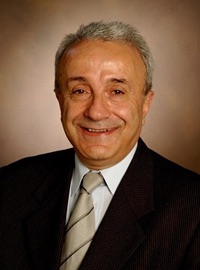
Ian Macara, Ph.D.
Professor and Chair, Department of Cell & Developmental Biology
VICC Member
Researcher
Contact Information:
Dept. of Cell and Developmental Biology
Vanderbilt University Medical Center
465 21st Avenue S., U 3209 MRB III
Nashville, TN 37232-8240
615-875-5565
Fax: 615-322-5060
Profile
Dr. Macara studies the development of the ducts that form breast tissue, and the mechanisms that can result in the initiation and spread of breast cancer. Most types of cancer arise from epithelial cells. These cells form many of the organs in the body, and arrange themselves into either sheets (such as the skin) or branching ducts (such as kidney, or mammary glands). Epithelial cells are polarized - they have a top and bottom, which differ from one another in form and function. Dr.
Read more ....
Dr. Macara studies the development of the ducts that form breast tissue, and the mechanisms that can result in the initiation and spread of breast cancer. Most types of cancer arise from epithelial cells. These cells form many of the organs in the body, and arrange themselves into either sheets (such as the skin) or branching ducts (such as kidney, or mammary glands). Epithelial cells are polarized - they have a top and bottom, which differ from one another in form and function. Dr. Macara is studying how polarization occurs, how this process might be disrupted in cancer, and how defects in polarization contribute to invasive behavior and metastasis.
Education
- BSc - University of Sheffield, UK
- PhD - University of Sheffield, UK
- Postdoctoral training - Harvard University, MA
Research Description
Our lab is interested in the ways in which cells break symmetry, and initiate and maintain spatial asymmetries. Asymmetries can form as cells polarize, or can occur within cells, for instance during mitosis. Gradients of proteins or other molecules can create asymmetries that the cell uses to specify orientations and subcellular locations. Carcinomas arise from epithelial cells, and tumor progression involves a loss of polarity, so an understanding of cell polarity is important in the identification of novel therapeutic approaches to cancer. Cell polarity is usually lost early during tumor progression, and several polarity proteins have been identified as tumor suppressors.
We have four major programs ongoing – on the mechanisms that determine the polarization of mammalian epithelial cells; on the control of mammary gland morphogenesis and breast cancer initiation and metastasis; on the role of septins in cell polarity and in DNA repair; and on RNA localization.
We use a range of approaches to study these cell processes, including a new mammary gland regeneration model in which mammary stem cells are transduced with lentivirus then transplanted into the cleared fat pads of recipient mice, where the cells regenerate an entire new mammary ductal tree. We have also developed new methods to purify RNA binding proteins, and to study miRNA function in mammary gland morphogenesis. In vitro studies include 3D culture of mammary gland organoids, human breast tissue organotypic cultures, and renal epithelial cysts. We are using these systems to explore the mechanisms that control spindle orientation during mitosis; the roles of small GTPases in cell polarization; and the mechanisms underlying asymmetric cell divisions of mammary stem cells.
Publications
- McCaffrey, LM, Macara, IG Signaling pathways in cell polarity. Cold Spring Harb Perspect Biol, 4(6), 2012.
- Petkowski, JJ, Schaner Tooley, CE, Anderson, LC, Shumilin, IA, Balsbaugh, JL, Shabanowitz, J, Hunt, DF, Minor, W, Macara, IG Substrate Specificity of Mammalian N-Terminal α-Amino Methyltransferase NRMT. Biochemistry, 2012.
- Iioka, H, Loiselle, D, Haystead, TA, Macara, IG Efficient detection of RNA-protein interactions using tethered RNAs. Nucleic Acids Res, 39(8), e53, 2011.
- McCaffrey, LM, Macara, IG Epithelial organization, cell polarity and tumorigenesis. Trends Cell Biol, 21(12), 727-35, 2011.
- Pasic, L, Eisinger-Mathason, TS, Velayudhan, BT, Moskaluk, CA, Brenin, DR, Macara, IG, Lannigan, DA Sustained activation of the HER1-ERK1/2-RSK signaling pathway controls myoepithelial cell fate in human mammary tissue. Genes Dev, 25(15), 1641-53, 2011.
- Kim, JY, Oh, MH, Bernard, LP, Macara, IG, Zhang, H The RhoG/ELMO1/Dock180 signaling module is required for spine morphogenesis in hippocampal neurons. J Biol Chem, 286(43), 37615-24, 2011.
- Tooley, CE, Petkowski, JJ, Muratore-Schroeder, TL, Balsbaugh, JL, Shabanowitz, J, Sabat, M, Minor, W, Hunt, DF, Macara, IG NRMT is an alpha-N-methyltransferase that methylates RCC1 and retinoblastoma protein. Nature, 466(7310), 1125-8, 2010.
- Hao, Y, Du, Q, Chen, X, Zheng, Z, Balsbaugh, JL, Maitra, S, Shabanowitz, J, Hunt, DF, Macara, IG Par3 controls epithelial spindle orientation by aPKC-mediated phosphorylation of apical Pins. Curr Biol, 20(20), 1809-18, 2010.
- Qin, Y, Meisen, WH, Hao, Y, Macara, IG Tuba, a Cdc42 GEF, is required for polarized spindle orientation during epithelial cyst formation. J Cell Biol, 189(4), 661-9, 2010.
- Macara, IG, Iioka, H, Mili, S Axon growth-stimulus package includes local translation. Nat Cell Biol, 11(8), 919-21, 2009.
- Mili, S, Macara, IG RNA localization and polarity: from A(PC) to Z(BP). Trends Cell Biol, 19(4), 156-64, 2009.
- McCaffrey, LM, Macara, IG The Par3/aPKC interaction is essential for end bud remodeling and progenitor differentiation during mammary gland morphogenesis. Genes Dev, 23(12), 1450-60, 2009.
- McCaffrey, LM, Macara, IG Widely conserved signaling pathways in the establishment of cell polarity. Cold Spring Harb Perspect Biol, 1(2), a001370, 2009.
- Eisinger-Mathason, TS, Andrade, J, Groehler, AL, Clark, DE, Muratore-Schroeder, TL, Pasic, L, Smith, JA, Shabanowitz, J, Hunt, DF, Macara, IG, Lannigan, DA Codependent functions of RSK2 and the apoptosis-promoting factor TIA-1 in stress granule assembly and cell survival. Mol Cell, 31(5), 722-36, 2008.
- Mili, S, Moissoglu, K, Macara, IG Genome-wide screen reveals APC-associated RNAs enriched in cell protrusions. Nature, 453(7191), 115-9, 2008.
- Macara, IG, Mili, S Polarity and differential inheritance--universal attributes of life. Cell, 135(5), 801-12, 2008.
- Hao, Y, Macara, IG Regulation of chromatin binding by a conformational switch in the tail of the Ran exchange factor RCC1. J Cell Biol, 182(5), 827-36, 2008.
- Dorfman, J, Macara, IG STRADalpha regulates LKB1 localization by blocking access to importin-alpha, and by association with Crm1 and exportin-7. Mol Biol Cell, 19(4), 1614-26, 2008.
- Zhang, H, Macara, IG The PAR-6 polarity protein regulates dendritic spine morphogenesis through p190 RhoGAP and the Rho GTPase. Dev Cell, 14(2), 216-26, 2008.
- Goldstein, B, Macara, IG The PAR proteins: fundamental players in animal cell polarization. Dev Cell, 13(5), 609-22, 2007.
You do not have JavaScript enabled. This site works better with JavaScript turned on.