<?xml version="1.0" encoding="UTF-8"?>
<rss version="2.0"
	xmlns:content="http://purl.org/rss/1.0/modules/content/"
	xmlns:wfw="http://wellformedweb.org/CommentAPI/"
	xmlns:dc="http://purl.org/dc/elements/1.1/"
	xmlns:atom="http://www.w3.org/2005/Atom"
	xmlns:sy="http://purl.org/rss/1.0/modules/syndication/"
	xmlns:slash="http://purl.org/rss/1.0/modules/slash/"
	>

<channel>
	<title>VICC News &#38; Publications</title>
	<atom:link href="http://www.vicc.org/news/feed/" rel="self" type="application/rss+xml" />
	<link>http://www.vicc.org/news</link>
	<description></description>
	<lastBuildDate>Mon, 14 May 2012 19:23:49 +0000</lastBuildDate>
	<language>en</language>
	<sy:updatePeriod>hourly</sy:updatePeriod>
	<sy:updateFrequency>1</sy:updateFrequency>
	<generator>http://wordpress.org/?v=3.3.2</generator>
		<item>
		<title>Bates Recognized for Efforts to Boost Cancer Prevention</title>
		<link>http://www.vicc.org/news/2012/05/bates-recognized-for-efforts-to-boost-cancer-prevention/</link>
		<comments>http://www.vicc.org/news/2012/05/bates-recognized-for-efforts-to-boost-cancer-prevention/#comments</comments>
		<pubDate>Mon, 14 May 2012 15:46:01 +0000</pubDate>
		<dc:creator>Heather Burchfield</dc:creator>
				<category><![CDATA[Cancer News]]></category>
		<category><![CDATA[Prevention]]></category>
		<category><![CDATA[Wellness]]></category>
		<category><![CDATA[cancer]]></category>
		<category><![CDATA[Office of Patient and Community Education]]></category>
		<category><![CDATA[prevention]]></category>
		<category><![CDATA[Sheila Bates]]></category>
		<category><![CDATA[Tennessee Public Health Association]]></category>
		<category><![CDATA[vanderbilt]]></category>
		<category><![CDATA[Vanderbilt cancer]]></category>
		<category><![CDATA[Vanderbilt University Medical Center]]></category>
		<category><![CDATA[vanderbilt-Ingram Cancer center]]></category>

		<guid isPermaLink="false">http://www.vicc.org/news/?p=6305</guid>
		<description><![CDATA[Sheila Bates, M.S.S.W., manager of Community Outreach for Vanderbilt-Ingram Cancer Center, has received the 2012 Visionary Award from the Tennessee Public Health Association (TPHA), Middle Tennessee region. The Visionary Award is presented to individuals or groups who are leaders in the area of prevention. Bates was recognized for her work as creator and director of [...]]]></description>
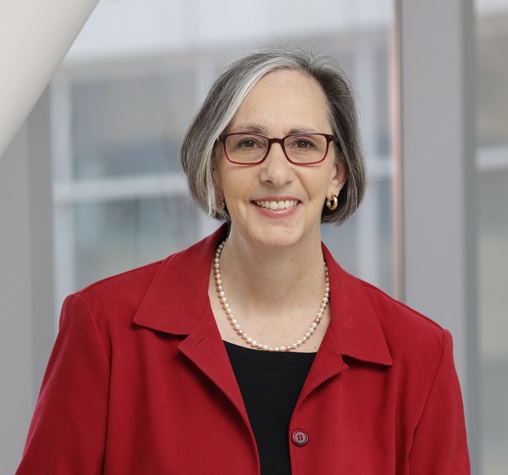
			<content:encoded><![CDATA[<div id="attachment_6306" class="wp-caption alignright" style="width: 190px"><img class="size-full wp-image-6306" title="image-3" src="http://www.vicc.org/news/wp-content/uploads/2012/05/image-3.jpg" alt="" width="180" height="271" /><p class="wp-caption-text">Sheila Bates, M.S.S.W.</p></div>
<p>Sheila Bates, M.S.S.W., manager of Community Outreach for Vanderbilt-Ingram Cancer Center, has received the 2012 Visionary Award from the <a href="http://www.tnpublichealth.org/" target="_blank">Tennessee Public Health Association</a> (TPHA), Middle Tennessee region.</p>
<p>The Visionary Award is presented to individuals or groups who are leaders in the area of prevention.</p>
<p>Bates was recognized for her work as creator and director of the “Cancer Queens! A Cancer Prevention Musical Revue.” The Cancer Queens is a group of about a dozen Tennessee health care educators, many from Vanderbilt, providing health messages in a format known as “edutainment.”</p>
<p>Wearing rhinestone tiaras and feather boas, the women perform a humorous and educational musical revue with song lyrics about cancer prevention set to melodies from well-known songs. The program includes seven cancer prevention and early detection messages.</p>
<p>“While I had the idea for the Cancer Queens and wrote the material, the program wouldn&#8217;t have happened and been so successful if VICC and Anne Washburn, associate director of the Office of Patient and Community Education, hadn&#8217;t supported and nurtured it. Our dedicated volunteer Cancer Queens have also donated hundreds of hours of their time to the program,” said Bates.</p>
<p>The Cancer Queens have presented their message to more than 6,500 people and have been recognized by the Centers for Disease Control and Prevention for their success in promoting cancer risk reduction education.</p>
]]></content:encoded>
			<wfw:commentRss>http://www.vicc.org/news/2012/05/bates-recognized-for-efforts-to-boost-cancer-prevention/feed/</wfw:commentRss>
		<slash:comments>0</slash:comments>
		</item>
		<item>
		<title>Personalized Cancer Care Highlighted</title>
		<link>http://www.vicc.org/news/2012/04/personalized-cancer-care-highlighted-at-iom-meeting/</link>
		<comments>http://www.vicc.org/news/2012/04/personalized-cancer-care-highlighted-at-iom-meeting/#comments</comments>
		<pubDate>Thu, 26 Apr 2012 18:54:48 +0000</pubDate>
		<dc:creator>Heather Burchfield</dc:creator>
				<category><![CDATA[Cancer News]]></category>
		<category><![CDATA[Cancer Research]]></category>
		<category><![CDATA[Faculty Staff News]]></category>
		<category><![CDATA[cancer]]></category>
		<category><![CDATA[DNA]]></category>
		<category><![CDATA[genomics]]></category>
		<category><![CDATA[Hal Moses]]></category>
		<category><![CDATA[harvey fineberg]]></category>
		<category><![CDATA[Institute of Medicine]]></category>
		<category><![CDATA[jeff balser]]></category>
		<category><![CDATA[Mia Levy]]></category>
		<category><![CDATA[mics-based tests]]></category>
		<category><![CDATA[omics]]></category>
		<category><![CDATA[Personalized Cancer Medicine]]></category>
		<category><![CDATA[personalized medicine]]></category>
		<category><![CDATA[proteins]]></category>
		<category><![CDATA[proteomics]]></category>
		<category><![CDATA[william pao]]></category>

		<guid isPermaLink="false">http://www.vicc.org/news/?p=6292</guid>
		<description><![CDATA[A recent explosion in technological advances has created a new field known as translational “omics” that allows the measurement of molecules within a tissue or cell — genomics investigates DNA and proteomics examines proteins. These new omics-based tests may be used to guide patient therapy in the future. Such omics-based tests are much more complex [...]]]></description>
			<content:encoded><![CDATA[<div id="attachment_6293" class="wp-caption alignright" style="width: 310px"><img class="size-medium wp-image-6293" title="image-1" src="http://www.vicc.org/news/wp-content/uploads/2012/04/image-11-300x200.jpg" alt="" width="300" height="200" /><p class="wp-caption-text">Taking part in Monday’s regional meeting of the Institute of Medicine (IOM) were, from left, Jeff Balser, M.D., Ph.D., Harvey Fineberg, M.D., Ph.D., Harold (Hal) Moses, M.D., and William Pao, M.D., Ph.D. (photo by Anne Rayner)</p></div>
<p>A recent explosion in technological advances has created a new field known as translational “omics” that allows the measurement of molecules within a tissue or cell — genomics investigates DNA and proteomics examines proteins. These new omics-based tests may be used to guide patient therapy in the future.</p>
<p>Such omics-based tests are much more complex than in the past, because they are composed or derived from multiple molecular measurements and interpreted by a fully specified computational model to produce a result which can be used for patients in the clinic.</p>
<p>The future of omics and personalized cancer medicine was in the spotlight as Vanderbilt University School of Medicine hosted a regional meeting of the <a href="www.iom.edu/" target="_blank">Institute of Medicine</a> (IOM) of the National Academies. Jeff Balser, M.D., Ph.D., vice chancellor for Health Affairs and dean of the School of Medicine, and Harvey Fineberg, M.D., Ph.D., president of the IOM, led the open forum.</p>
<p>Fineberg discussed the importance of “proceeding sensibly, safely and effectively in translating genomic knowledge into clinical trials.”</p>
<p>“What is likely going to be the case for all of us in clinical and investigational medicine is that our concept of disease at diagnosis will be profoundly altered as genomic information and omic knowledge becomes more prevalent and more established in differentiating patients,” said Fineberg.</p>
<p>However, translating omics-based tests for patient care has turned out to be far more demanding than anticipated and has already led to invalidation of a set of tests used to match patients to clinical trials at one academic medical center.</p>
<p>Two Vanderbilt cancer researchers served on a specially appointed national IOM committee to develop guidelines for future omics-based testing. Harold (Hal) Moses, M.D., director emeritus of Vanderbilt-Ingram Cancer Center and Hortense B. Ingram Professor of Molecular Oncology, and William Pao, M.D., Ph.D., director of the Division of Hematology and Oncology and director of Personalized Cancer Medicine, reported on the lessons learned from the committee’s investigation and the different approach Vanderbilt is taking to enable a personalized cancer medicine approach.</p>
<p>Moses pointed out that omics-based tests are not straightforward.</p>
<p>“These are complex data sets and there is a high risk that the computational model will “overfit” the data,” explained Moses.</p>
<p>He said the resulting tests must be accurate and reproducible, so the use of rigorous methods in statistics, bioinformatics and data management are essential.</p>
<p>As part of the best practices recommended by the IOM committee for the creation and evaluation of future omics-based tests, test investigators need to disclose their methods and provide detailed information about each step in the process. The computational procedures should be “locked down” and then confirmed with a new set of samples.</p>
<p>The committee also stressed the importance of institutional awareness and oversight of the development of tests for clinical trials.</p>
<p>Pao pointed out that non-omics based tests can already be used to match the right therapy to patients with certain cancers. Existing technology can identify gene mutations that predict tumor sensitivity to specific therapies, and Vanderbilt has been on the leading edge of such efforts to match lung cancer and melanoma patients to the best treatments based on the genetic makeup of individual tumors.</p>
<p>“These new personalized treatment options are leading to increased overall survival in lung cancer and melanoma, and we are hopeful that this approach will provide better outcomes for patients,” Pao said.</p>
<p>To help patients, physicians and researchers quickly find information about the importance of specific mutations, as well as the availability of clinical research trials, Pao and Mia Levy, M.D., Ph.D., assistant professor of Biomedical Informatics and Medicine and Cancer Clinical Informatics Officer, have developed My Cancer Genome, an online medical decision support tool.</p>
<p>The award-winning My Cancer Genome has already been viewed more than 60,000 times by individuals in 120 countries.<br />
Fineberg praised these new Vanderbilt initiatives.</p>
<p>“This program is pushing ahead at the frontiers and contributing greatly not only to patient welfare but also providing the kind of patient information, patient insights and the strategies that will help guide all investigations in this very critical field,” Fineberg said.</p>
]]></content:encoded>
			<wfw:commentRss>http://www.vicc.org/news/2012/04/personalized-cancer-care-highlighted-at-iom-meeting/feed/</wfw:commentRss>
		<slash:comments>0</slash:comments>
		</item>
		<item>
		<title>New Drug Mutes More Melanomas</title>
		<link>http://www.vicc.org/news/2012/04/new-drug-mutes-more-melanomas/</link>
		<comments>http://www.vicc.org/news/2012/04/new-drug-mutes-more-melanomas/#comments</comments>
		<pubDate>Thu, 26 Apr 2012 18:50:37 +0000</pubDate>
		<dc:creator>Heather Burchfield</dc:creator>
				<category><![CDATA[Cancer News]]></category>
		<category><![CDATA[Cancer Research]]></category>
		<category><![CDATA[Faculty Staff News]]></category>
		<category><![CDATA[Melanoma]]></category>
		<category><![CDATA[Ann Richmond]]></category>
		<category><![CDATA[BRAF]]></category>
		<category><![CDATA[BRAF-targeted drugs]]></category>
		<category><![CDATA[cancer]]></category>
		<category><![CDATA[Clinical Cancer Research]]></category>
		<category><![CDATA[gene]]></category>
		<category><![CDATA[journal publication]]></category>
		<category><![CDATA[mutation]]></category>
		<category><![CDATA[National Cancer Institute]]></category>
		<category><![CDATA[National Institutes of Health]]></category>
		<category><![CDATA[NCI]]></category>
		<category><![CDATA[RAF265]]></category>
		<category><![CDATA[T.J. Martell Foundation]]></category>
		<category><![CDATA[vanderbilt]]></category>
		<category><![CDATA[Vanderbilt cancer]]></category>
		<category><![CDATA[Vanderbilt University Medical Center]]></category>
		<category><![CDATA[vanderbilt-Ingram Cancer center]]></category>

		<guid isPermaLink="false">http://www.vicc.org/news/?p=6290</guid>
		<description><![CDATA[Therapies targeted to a specific mutation in the BRAF gene can significantly reduce tumor burden in metastatic melanoma. But these therapies are not suitable for melanomas lacking the mutation, and even tumors carrying the BRAF mutation eventually become resistant to those therapies. Using human melanoma tumors implanted into mice, Ann Richmond, Ph.D., and colleagues assessed [...]]]></description>
			<content:encoded><![CDATA[<p>Therapies targeted to a specific mutation in the BRAF gene can significantly reduce tumor burden in metastatic melanoma. But these therapies are not suitable for melanomas lacking the mutation, and even tumors carrying the BRAF mutation eventually become resistant to those therapies.</p>
<p>Using human melanoma tumors implanted into mice, Ann Richmond, Ph.D., and colleagues assessed the effectiveness of an experimental drug (RAF265) that inhibits a broader set of cellular enzymes than the BRAF-targeted drugs. They found that 71 percent of tumors responding to the drug had the “normal” (wild-type) BRAF; only 29 percent of responding tumors carried the BRAF mutation. Additionally, responsive tumors showed increased expression of genes involved with a number of cellular pathways involving cell growth and cancer development.</p>
<p>The findings, reported in the April 15 <em><a href="http://clincancerres.aacrjournals.org/content/18/8/2184.abstract">Clinical Cancer Research</a></em>, suggest that RAF265 may be beneficial for patients not eligible for BRAF-targeted therapies and that gene expression profiling may be useful for selecting patients for RAF265 therapy.</p>
<p>The research was supported by grants from the <a href="http://www.cancer.gov" target="_blank">National Cancer Institute </a>(CA68485) of the <a href="http://www.nih.gov/" target="_blank">National Institutes of Health</a> and the <a href="http://www.tjmartellfoundation.org/" target="_blank">T.J. Martell Foundation</a>.</p>
]]></content:encoded>
			<wfw:commentRss>http://www.vicc.org/news/2012/04/new-drug-mutes-more-melanomas/feed/</wfw:commentRss>
		<slash:comments>0</slash:comments>
		</item>
		<item>
		<title>Dermatology Adds New Treatments</title>
		<link>http://www.vicc.org/news/2012/04/dermatology-adds-new-treatments/</link>
		<comments>http://www.vicc.org/news/2012/04/dermatology-adds-new-treatments/#comments</comments>
		<pubDate>Thu, 26 Apr 2012 18:46:14 +0000</pubDate>
		<dc:creator>Heather Burchfield</dc:creator>
				<category><![CDATA[Cancer News]]></category>
		<category><![CDATA[Faculty Staff News]]></category>
		<category><![CDATA[Prevention]]></category>
		<category><![CDATA[Skin Cancer]]></category>
		<category><![CDATA[dermatology]]></category>
		<category><![CDATA[medical oncology]]></category>
		<category><![CDATA[Michel McDonald]]></category>
		<category><![CDATA[Mohs surgery]]></category>
		<category><![CDATA[pre-cancer]]></category>
		<category><![CDATA[prevention]]></category>
		<category><![CDATA[Thomas Stasko]]></category>
		<category><![CDATA[treatment]]></category>
		<category><![CDATA[vanderbilt]]></category>
		<category><![CDATA[Vanderbilt cancer]]></category>
		<category><![CDATA[Vanderbilt University Medical Center]]></category>
		<category><![CDATA[vanderbilt-Ingram Cancer center]]></category>

		<guid isPermaLink="false">http://www.vicc.org/news/?p=6286</guid>
		<description><![CDATA[Vanderbilt Dermatology has increased its ability to treat various forms of skin cancer, with the recent addition of a fifth Mohs surgeon and the approval of a new oral drug to treat the most severe cases of basal cell skin cancer. Preventing skin cancer, however, will always remain a focus. The Vanderbilt Mohs program became [...]]]></description>
			<content:encoded><![CDATA[<div id="attachment_6287" class="wp-caption alignright" style="width: 200px"><img class="size-full wp-image-6287" title="Michel McDonald, M.D." src="http://www.vicc.org/news/wp-content/uploads/2012/04/image.jpg" alt="" width="190" height="290" /><p class="wp-caption-text">Michel McDonald, M.D.</p></div>
<p>Vanderbilt Dermatology has increased its ability to treat various forms of skin cancer, with the recent addition of a fifth Mohs surgeon and the approval of a new oral drug to treat the most severe cases of basal cell skin cancer. Preventing skin cancer, however, will always remain a focus.</p>
<p>The Vanderbilt Mohs program became active in the early 1990s under the leadership of Thomas Stasko, M.D., professor of Medicine, and has now grown to five surgeons, including Michel McDonald, M.D., assistant professor of Medicine.</p>
<p>“We want to cover all aspects of cutaneous oncology,” she said. “Prevention and treatment, which may be surgical, topical or oral, and maintenance and follow-up with patients.”</p>
<p>For melanoma patients, McDonald said that Dermatology works seamlessly with surgical and medical oncology to bring patients the level of care they need.</p>
<p>For patients with severe basal cell carcinoma, the FDA has recently approved Vismodegib, the first oral medication for such cancer.</p>
<p>“It&#8217;s certainly not for every patient,” McDonald said. “This is for patients who have aggressive, difficult-to-treat tumors. It&#8217;s a new way of thinking about treating basal cell cancer, which can usually be treated with surgery or topical creams.”</p>
<p>Keeping pre-cancers from becoming cancerous is also an emphasis, with treatments such as light therapy and wrap therapy allowing many patients who have serious skin disease to avoid the need for multiple surgeries.</p>
<p>Of course, the need to treat cancer or pre-cancer would be reduced if more people opted for simple prevention.</p>
<p>The early spring in Nashville has allowed people to get an early start on warm weather activities, and dermatologists have begun to offer their skin care tips early, too.</p>
<p>Since most people get a large amount of their lifetime sun exposure before the age of 18, she says that parents should think about preserving their children&#8217;s skin automatically, much the same way they reflexively teach children to use seat belts. And she has an idea for how parents can set a good example.</p>
<p>“I tell people to put sunscreen next to their toothpaste,” McDonald said. “We don&#8217;t want people to change their lifestyle. We tell them to just be sensible.”</p>
<p>Being sensible involves staying out of the sun when it is most intense, between 10 a.m. and 2 p.m., using broad coverage sunscreen that filters both UVA and UVB light, and has a sun protection factor (SPF) of at least 15. The sunscreen should be reapplied every two hours.</p>
<p>For those who have a negative skin reaction to sunscreen, McDonald says, “There is great sun protective clothing and it has gotten less expensive.”</p>
]]></content:encoded>
			<wfw:commentRss>http://www.vicc.org/news/2012/04/dermatology-adds-new-treatments/feed/</wfw:commentRss>
		<slash:comments>0</slash:comments>
		</item>
		<item>
		<title>Event Offers Cancer Prevention Tips, Exhibits</title>
		<link>http://www.vicc.org/news/2012/04/event-offers-cancer-prevention-tips-exhibits/</link>
		<comments>http://www.vicc.org/news/2012/04/event-offers-cancer-prevention-tips-exhibits/#comments</comments>
		<pubDate>Thu, 26 Apr 2012 18:41:30 +0000</pubDate>
		<dc:creator>Heather Burchfield</dc:creator>
				<category><![CDATA[Cancer News]]></category>
		<category><![CDATA[Prevention]]></category>
		<category><![CDATA[Cancer Queens]]></category>
		<category><![CDATA[detection]]></category>
		<category><![CDATA[prevention]]></category>
		<category><![CDATA[Treat Yourself Like a Queen]]></category>
		<category><![CDATA[vanderbilt]]></category>
		<category><![CDATA[Vanderbilt cancer]]></category>
		<category><![CDATA[Vanderbilt University Medical Center]]></category>
		<category><![CDATA[vanderbilt-Ingram Cancer center]]></category>

		<guid isPermaLink="false">http://www.vicc.org/news/?p=6283</guid>
		<description><![CDATA[Vanderbilt-Ingram Cancer Center invites women to “Treat Yourself Like a Queen,” during a special health care and cancer prevention event, Saturday, May 5, 12:30 p.m. to 3:30 p.m., at the Vanderbilt University Student Life Center. The free event includes health information exhibits, shopping at the “Queenly Things Mall,” and a dessert reception. There will be [...]]]></description>
			<content:encoded><![CDATA[<p>Vanderbilt-Ingram Cancer Center invites women to “Treat Yourself Like a Queen,” during a special health care and cancer prevention event, Saturday, May 5, 12:30 p.m. to 3:30 p.m., at the Vanderbilt University Student Life Center.</p>
<p>The free event includes health information exhibits, shopping at the “Queenly Things Mall,” and a dessert reception.</p>
<p>There will be a special performance by the <a href="http://www.cancerqueens.net" target="_blank">Cancer Queens! A Cancer Prevention Musical Revue</a>, including the debut of a new song, “And Then She Got a Colonoscopy,” starring Polly and the Colon Polyps.</p>
<p>The Cancer Queens is a group of nearly a dozen Tennessee health care educators, many from Vanderbilt, providing health messages in a format known as “edutainment.” Wearing rhinestone tiaras and feather boas, the women perform a humorous and educational musical revue with song lyrics about cancer prevention set to melodies from well-known songs.</p>
<p>The Cancer Queens have presented their message to more than 6,500 people and have been highlighted as a success story for cancer risk reduction education by the Centers for Disease Control and Prevention.</p>
<p>The “Treat Yourself Like a Queen” event is open to the public and there is free parking in the 25th Avenue Garage with continuous shuttle service to the Student Life Center.</p>
<p>Seating is limited and reservations are required. <a href="http://treatyourselflikeaqueen.vumcevents.com" target="_blank">Register online</a> at  or visit <a href="http://www.cancerqueens.net" target="_blank">www.cancerqueens.net</a> for more information.</p>
]]></content:encoded>
			<wfw:commentRss>http://www.vicc.org/news/2012/04/event-offers-cancer-prevention-tips-exhibits/feed/</wfw:commentRss>
		<slash:comments>0</slash:comments>
		</item>
		<item>
		<title>VUSM to Host IOM Meeting</title>
		<link>http://www.vicc.org/news/2012/04/vusm-to-host-iom-meeting/</link>
		<comments>http://www.vicc.org/news/2012/04/vusm-to-host-iom-meeting/#comments</comments>
		<pubDate>Fri, 20 Apr 2012 14:31:14 +0000</pubDate>
		<dc:creator>Heather Burchfield</dc:creator>
				<category><![CDATA[Cancer News]]></category>
		<category><![CDATA[Faculty Staff News]]></category>
		<category><![CDATA[cancer]]></category>
		<category><![CDATA[Cancer Research]]></category>
		<category><![CDATA[Hal Moses]]></category>
		<category><![CDATA[hematology]]></category>
		<category><![CDATA[Institute of Medicine of the National Academies]]></category>
		<category><![CDATA[oncology]]></category>
		<category><![CDATA[vanderbilt]]></category>
		<category><![CDATA[Vanderbilt cancer]]></category>
		<category><![CDATA[Vanderbilt University Medical Center]]></category>
		<category><![CDATA[Vanderbilt University School of Medicine]]></category>
		<category><![CDATA[vanderbilt-Ingram Cancer center]]></category>
		<category><![CDATA[william pao]]></category>

		<guid isPermaLink="false">http://www.vicc.org/news/?p=6278</guid>
		<description><![CDATA[The Institute of Medicine of the National Academies (IOM), in conjunction with Vanderbilt University School of Medicine, will hold a regional meeting Monday, April 23, 4–6 p.m. in 208 Light Hall. The presentation, “Potential and Pitfalls of Gene and Omics-Based Treatment for Cancer,” will highlight recent advances in cancer research based on gene sequencing, along [...]]]></description>
			<content:encoded><![CDATA[<p>The <a href="http://www.iom.edu/" target="_blank">Institute of Medicine of the National Academies</a> (IOM), in conjunction with <a href="https://medschool.vanderbilt.edu/" target="_blank">Vanderbilt University School of Medicine</a>, will hold a regional meeting Monday, April 23, 4–6 p.m. in 208 Light Hall.</p>
<p>The presentation, “Potential and Pitfalls of Gene and Omics-Based Treatment for Cancer,” will highlight recent advances in cancer research based on gene sequencing, along with the challenges of dealing with the vast amounts of data generated by these new techniques.</p>
<p>Harvey Fineberg, M.D., Ph.D., president of the IOM, and Jeff Balser, M.D., Ph.D., vice chancellor for Health Affairs and dean of the School of Medicine, will open the session, which features presentations by two Vanderbilt-Ingram Cancer Center research leaders.</p>
<p>Harold (Hal) Moses, M.D., director emeritus of VICC and Hortense B. Ingram Professor of Molecular Oncology, will present “Evolution of Translational Omics: Lessons Learned and the Path Forward.”</p>
<p>William Pao, M.D., Ph.D., director of the Division of Hematology and Oncology and director of Personalized Cancer Medicine at VICC, will discuss “Implementing Genetically Informed Cancer Medicine at Vanderbilt.”</p>
<p>A reception will be held following the presentations.</p>
<p>To register for the event, visit <a href="http://www.iom.edu/TNRegPublic">www.iom.edu/TNRegPublic</a> or send an email to iomregTN@nas.edu.</p>
]]></content:encoded>
			<wfw:commentRss>http://www.vicc.org/news/2012/04/vusm-to-host-iom-meeting/feed/</wfw:commentRss>
		<slash:comments>0</slash:comments>
		</item>
		<item>
		<title>Free Screening for Head and Neck Cancer</title>
		<link>http://www.vicc.org/news/2012/04/free-screening-for-head-and-neck-cancer/</link>
		<comments>http://www.vicc.org/news/2012/04/free-screening-for-head-and-neck-cancer/#comments</comments>
		<pubDate>Fri, 20 Apr 2012 14:27:21 +0000</pubDate>
		<dc:creator>Heather Burchfield</dc:creator>
				<category><![CDATA[Cancer News]]></category>
		<category><![CDATA[Faculty Staff News]]></category>
		<category><![CDATA[Head and Neck Cancer]]></category>
		<category><![CDATA[Home Page Latest News]]></category>
		<category><![CDATA[Prevention]]></category>
		<category><![CDATA[Women's Cancers]]></category>
		<category><![CDATA[Young Adult Cancers]]></category>
		<category><![CDATA[cancer]]></category>
		<category><![CDATA[free screening]]></category>
		<category><![CDATA[head cancer]]></category>
		<category><![CDATA[Meharry Medical College]]></category>
		<category><![CDATA[National Cancer Institute]]></category>
		<category><![CDATA[NCI]]></category>
		<category><![CDATA[neck cancer]]></category>
		<category><![CDATA[Otolaryngology]]></category>
		<category><![CDATA[Tennessee Chapter of the Head and Neck Cancer Alliance]]></category>
		<category><![CDATA[VA Tennessee Valley Healthcare System]]></category>
		<category><![CDATA[vanderbilt]]></category>
		<category><![CDATA[Vanderbilt Bill Wilkerson Center for Otolaryngology and Communication Sciences]]></category>
		<category><![CDATA[Vanderbilt cancer]]></category>
		<category><![CDATA[Vanderbilt University Medical Center]]></category>
		<category><![CDATA[vanderbilt-Ingram Cancer center]]></category>
		<category><![CDATA[Wendell Yarbrough]]></category>

		<guid isPermaLink="false">http://www.vicc.org/news/?p=6275</guid>
		<description><![CDATA[The symptoms of head and neck cancer can be subtle, so to help catch the disease in its earliest stages the Tennessee Chapter of the Head and Neck Cancer Alliance, Vanderbilt-Ingram Cancer Center, the Vanderbilt Bill Wilkerson Center for Otolaryngology and Communication Sciences, Meharry Medical College and the VA Tennessee Valley Healthcare System will offer [...]]]></description>
			<content:encoded><![CDATA[<div id="attachment_4519" class="wp-caption alignright" style="width: 310px"><img class="size-medium wp-image-4519" title="image-11" src="http://www.vicc.org/news/wp-content/uploads/2011/05/image-11-300x199.jpg" alt="" width="300" height="199" /><p class="wp-caption-text">Wendell (Dell) Yarbrough, M.D. performing a head and neck cancer screening at last year&#39;s event. (photo by Steve Green)</p></div>
<p>The symptoms of head and neck cancer can be subtle, so to help catch the disease in its earliest stages the Tennessee Chapter of the Head and Neck Cancer Alliance, Vanderbilt-Ingram Cancer Center, the <a href="http://www.vanderbilthealth.com/billwilkerson/22526" target="_blank">Vanderbilt Bill Wilkerson Center for Otolaryngology and Communication Sciences</a>, <a href="http://www.mmc.edu/" target="_blank">Meharry Medical College</a> and the <a href="http://www.tennesseevalley.va.gov/" target="_blank">VA Tennessee Valley Healthcare System </a>will offer free head and neck screenings Friday, April 27.</p>
<p>The annual screening and educational events are open to the public and no appointment is necessary.</p>
<p>The screening sessions will be available 9 a.m. to 3 p.m. at:</p>
<ul>
<li>Vanderbilt Bill Wilkerson Center<br />
Odess Head &amp; Neck Surgery Clinic<br />
7209 Medical Center East</li>
<li>VA Tennessee Valley Healthcare System<br />
Surgical Clinic No. 1 – ENT Clinic<br />
1st Floor<br />
1310 24th Ave. South</li>
<li>Meharry Medical College School of Dentistry<br />
corner of Meharry Blvd and Dr. D.B. Todd Jr. Blvd.</li>
</ul>
<p>No appointments are necessary. For more information, contact:</p>
<ul>
<li>Michelle Pham at Vanderbilt<br />
615-936-4896</li>
<li>Edwin Emerson at the VA<br />
615-873-8357</li>
<li>Dana Marshall, M.D., at Meharry<br />
615-327-6549</li>
</ul>
<p>According to the <a href="http://www.cancer.gov" target="_blank">National Cancer Institute</a>, nearly 80,000 Americans are diagnosed with head and neck cancer every year. These cancers can occur in the nasal cavity, sinuses, throat, lips, mouth, thyroid, salivary glands or larynx (voice box).</p>
<p>“Lumps, bumps or sore spots on the head or neck or discomfort in the mouth and throat may be early symptoms of head and neck cancer,” said Wendell (Dell) Yarbrough, M.D., associate professor of Otolaryngology and Cancer Biology at VICC. “It’s easy to miss these symptoms or to assume that a sore throat is just a viral infection, but if these issues continue for more than two weeks they can be a sign of something serious.”</p>
<p>Other symptoms include difficulty swallowing, hoarseness or a change in the voice.</p>
<p>The screening exams take only a few minutes and are painless. During the exam, physicians inspect the mouth and throat and check the neck for abnormalities in the thyroid, lymph nodes or salivary glands.</p>
]]></content:encoded>
			<wfw:commentRss>http://www.vicc.org/news/2012/04/free-screening-for-head-and-neck-cancer/feed/</wfw:commentRss>
		<slash:comments>1</slash:comments>
		</item>
		<item>
		<title>Going for the Gold</title>
		<link>http://www.vicc.org/news/2012/04/going-for-the-gold/</link>
		<comments>http://www.vicc.org/news/2012/04/going-for-the-gold/#comments</comments>
		<pubDate>Tue, 17 Apr 2012 23:00:02 +0000</pubDate>
		<dc:creator>Heather Burchfield</dc:creator>
				<category><![CDATA[Brain Tumors]]></category>
		<category><![CDATA[Breast Cancer]]></category>
		<category><![CDATA[Cancer News]]></category>
		<category><![CDATA[Childhood Cancer]]></category>
		<category><![CDATA[Colorectal Cancer]]></category>
		<category><![CDATA[Faculty Staff News]]></category>
		<category><![CDATA[Gastrointestinal Cancer]]></category>
		<category><![CDATA[Gynecologic Cancer]]></category>
		<category><![CDATA[Head and Neck Cancer]]></category>
		<category><![CDATA[Home Page Feature]]></category>
		<category><![CDATA[Leukemia]]></category>
		<category><![CDATA[Liver Cancer]]></category>
		<category><![CDATA[Lung Cancer]]></category>
		<category><![CDATA[Lymphoma]]></category>
		<category><![CDATA[Melanoma]]></category>
		<category><![CDATA[Pancreatic Cancer]]></category>
		<category><![CDATA[Prostate Cancer]]></category>
		<category><![CDATA[Skin Cancer]]></category>
		<category><![CDATA[Survivorship]]></category>
		<category><![CDATA[Urologic Cancers]]></category>
		<category><![CDATA[Wellness]]></category>
		<category><![CDATA[Women's Cancers]]></category>
		<category><![CDATA[Young Adult Cancers]]></category>
		<category><![CDATA[" "Celebration of Cancer Survivorship]]></category>
		<category><![CDATA[cancer]]></category>
		<category><![CDATA[Cancer Survivorship Conference and Celebration]]></category>
		<category><![CDATA[REACH for Survivorship Program]]></category>
		<category><![CDATA[survivor]]></category>
		<category><![CDATA[Survivorship conference]]></category>
		<category><![CDATA[vanderbilt]]></category>
		<category><![CDATA[Vanderbilt Breast Center]]></category>
		<category><![CDATA[Vanderbilt cancer]]></category>
		<category><![CDATA[Vanderbilt University Medical Center]]></category>
		<category><![CDATA[vanderbilt-Ingram Cancer center]]></category>
		<category><![CDATA[wellness]]></category>

		<guid isPermaLink="false">http://www.vicc.org/news/?p=6260</guid>
		<description><![CDATA[Vanderbilt-Ingram Cancer Center cordially invites you and your guests to join us for Going for the Gold: Living Well through Cancer! Date: Saturday, June 30, 2012 Time: 9:30 a.m.-2:30 p.m. Where: Vanderbilt University Student Life Center 310 25th Ave. South Nashville, TN 37240 Parking: There will be valet parking at the event. View Larger Map [...]]]></description>
			<content:encoded><![CDATA[<p><img class="alignright size-full wp-image-6261" title="Layout 1" src="http://www.vicc.org/news/wp-content/uploads/2012/04/VICC-Survive-Save-DateWeb.jpg" alt="" width="300" height="194" />Vanderbilt-Ingram Cancer Center cordially invites you and your guests to join us for Going for the Gold: Living Well through Cancer!</p>
<p><strong>Date:</strong> Saturday, June 30, 2012<br />
<strong>Time:</strong> 9:30 a.m.-2:30 p.m.<br />
<strong>Where:</strong> Vanderbilt University Student Life Center<br />
310 25th Ave. South<br />
Nashville, TN 37240<strong><br />
Parking:</strong> There will be valet parking at the event.<br />
<iframe src="http://maps.google.com/maps?hl=en&amp;client=firefox-a&amp;ie=UTF8&amp;q=vanderbilt+student+life+center&amp;fb=1&amp;gl=us&amp;hq=vanderbilt+student+life+center&amp;cid=0,0,18310926952928372611&amp;t=m&amp;ll=36.144373,-86.806197&amp;spn=0.005198,0.006437&amp;z=16&amp;iwloc=A&amp;output=embed" frameborder="0" marginwidth="0" marginheight="0" scrolling="no" width="200" height="200"></iframe><br />
<small><a style="color: #0000ff; text-align: right;" href="http://maps.google.com/maps?hl=en&amp;client=firefox-a&amp;ie=UTF8&amp;q=vanderbilt+student+life+center&amp;fb=1&amp;gl=us&amp;hq=vanderbilt+student+life+center&amp;cid=0,0,18310926952928372611&amp;t=m&amp;ll=36.144373,-86.806197&amp;spn=0.005198,0.006437&amp;z=16&amp;iwloc=A&amp;source=embed">View Larger Map</a></small></p>
<h3>Keynote Speaker</h3>
<p>Scott Hamilton<br />
Olympic gold medalist figure skater and cancer survivor</p>
<h3>Special Guest</h3>
<p>Kathy Mattea<br />
Musician, public speaker, activist and caregiver</p>
<p><strong>Sponsored by Vanderbilt-Ingram Cancer Center, <a href="http://www.gildasclubnashville.org/" target="_blank">Gilda&#8217;s Club Nashville</a></strong> <strong>and <a href="http://www.childrenshospital.vanderbilt.org/" target="_blank">Monroe Carell Jr. Children&#8217;s Hospital at Vanderbilt</a>.</strong></p>
<p>The Cancer Survivorship Conference and Celebration is a free event for everyone whose life has been affected by cancer, including adult and childhood cancer patients and survivors, family members, friends and medical professionals.</p>
<h3><a href="http://www.vanderbilthealth.com/cancer/38273">Register for Going for the Gold</a></h3>
]]></content:encoded>
			<wfw:commentRss>http://www.vicc.org/news/2012/04/going-for-the-gold/feed/</wfw:commentRss>
		<slash:comments>0</slash:comments>
		</item>
		<item>
		<title>Wilms&#8217; Tumors Differ in Developing Nations</title>
		<link>http://www.vicc.org/news/2012/04/wilms-tumors-differ-in-developing-nations/</link>
		<comments>http://www.vicc.org/news/2012/04/wilms-tumors-differ-in-developing-nations/#comments</comments>
		<pubDate>Fri, 13 Apr 2012 14:39:21 +0000</pubDate>
		<dc:creator>Heather Burchfield</dc:creator>
				<category><![CDATA[Cancer News]]></category>
		<category><![CDATA[Cancer Research]]></category>
		<category><![CDATA[Andrew J. Murphy]]></category>
		<category><![CDATA[cancer]]></category>
		<category><![CDATA[Department of Defense]]></category>
		<category><![CDATA[developing nation]]></category>
		<category><![CDATA[International Journal of Cancer]]></category>
		<category><![CDATA[Jason Axt]]></category>
		<category><![CDATA[journal publication]]></category>
		<category><![CDATA[Kenya]]></category>
		<category><![CDATA[National Cancer Institute]]></category>
		<category><![CDATA[National Center for Research Resources]]></category>
		<category><![CDATA[National Institutes of Health]]></category>
		<category><![CDATA[vanderbilt]]></category>
		<category><![CDATA[Vanderbilt cancer]]></category>
		<category><![CDATA[Vanderbilt University Medical Center]]></category>
		<category><![CDATA[vanderbilt-Ingram Cancer center]]></category>
		<category><![CDATA[Wilms' Tumors]]></category>

		<guid isPermaLink="false">http://www.vicc.org/news/?p=6252</guid>
		<description><![CDATA[Diseases that are treatable in developed nations are often lethal in developing countries. For Wilms’ tumor, the most common childhood kidney cancer, survival rates in developed countries exceed 90 percent – but in developing nations, survival can be as low as 35 percent. Lack of adequate health care resources is largely responsible for this survival [...]]]></description>
			<content:encoded><![CDATA[<p><img class="alignright size-full wp-image-6253" title="image-3" src="http://www.vicc.org/news/wp-content/uploads/2012/04/image-3.jpg" alt="" width="200" height="150" />Diseases that are treatable in developed nations are often lethal in developing countries. For Wilms’ tumor, the most common childhood kidney cancer, survival rates in developed countries exceed 90 percent – but in developing nations, survival can be as low as 35 percent.</p>
<p>Lack of adequate health care resources is largely responsible for this survival disparity, but co-investigators Andrew J. Murphy, M.D., Jason Axt, M.D., and colleagues suspected that biological factors may also contribute. The researchers assessed various cellular and molecular features in tumor samples from 15 Kenyan children and compared the results to those from North American Wilms’ tumor samples.</p>
<p>They report in the <a href="http://onlinelibrary.wiley.com/doi/10.1002/ijc.27544/abstract">International Journal of Cancer</a> that Kenyan Wilms’ tumors exhibit a predominance of immature cells (a feature of aggressiveness), cellular features of treatment resistance, and a molecular signature distinct from that of North American tumors.</p>
<p>The results suggest that these biological features may contribute to the poor outcomes in developing countries and that such tumors may require different treatment approaches than those of developed nations.</p>
<p>The research was funded by grants from the <a href="http://www.ncrr.nih.gov/" target="_blank">National Center for Research Resources</a> and the <a href="http://www.cancer.gov" target="_blank">National Cancer Institute</a> of the National Institutes of Health, and the Department of Defense.</p>
]]></content:encoded>
			<wfw:commentRss>http://www.vicc.org/news/2012/04/wilms-tumors-differ-in-developing-nations/feed/</wfw:commentRss>
		<slash:comments>0</slash:comments>
		</item>
		<item>
		<title>VICC&#8217;s Correa Honored with AACR Lectureship</title>
		<link>http://www.vicc.org/news/2012/04/viccs-correa-honored-with-aacr-lectureship/</link>
		<comments>http://www.vicc.org/news/2012/04/viccs-correa-honored-with-aacr-lectureship/#comments</comments>
		<pubDate>Fri, 13 Apr 2012 14:32:27 +0000</pubDate>
		<dc:creator>Heather Burchfield</dc:creator>
				<category><![CDATA[Cancer News]]></category>
		<category><![CDATA[Cancer Research]]></category>
		<category><![CDATA[Faculty Staff News]]></category>
		<category><![CDATA[AACR]]></category>
		<category><![CDATA[american association for cancer research]]></category>
		<category><![CDATA[cancer]]></category>
		<category><![CDATA[Gastroenterology]]></category>
		<category><![CDATA[Hepatology]]></category>
		<category><![CDATA[Jane Cooke Wright Lectureship]]></category>
		<category><![CDATA[National Cancer Institute]]></category>
		<category><![CDATA[NCI]]></category>
		<category><![CDATA[nutrition]]></category>
		<category><![CDATA[Pelayo Correa]]></category>
		<category><![CDATA[vanderbilt]]></category>
		<category><![CDATA[Vanderbilt cancer]]></category>
		<category><![CDATA[Vanderbilt University Medical Center]]></category>
		<category><![CDATA[vanderbilt-Ingram Cancer center]]></category>

		<guid isPermaLink="false">http://www.vicc.org/news/?p=6248</guid>
		<description><![CDATA[Pelayo Correa, M.D., professor of Pathology, Microbiology and Immunulogy, has been recognized by the American Association for Cancer Research (AACR) and its Minorities in Cancer Research membership group with the Jane Cooke Wright Lectureship. Correa holds the Anne Potter Wilson chair in cancer research in the Division of Gastroenterology, Hepatology and Nutrition. The AACR-MICR-Jane Cooke [...]]]></description>
			<content:encoded><![CDATA[<div id="attachment_6249" class="wp-caption alignright" style="width: 190px"><img class="size-full wp-image-6249" title="image-1" src="http://www.vicc.org/news/wp-content/uploads/2012/04/image-1.jpg" alt="" width="180" height="252" /><p class="wp-caption-text">Pelayo Correa, M.D.</p></div>
<p>Pelayo Correa, M.D., professor of Pathology, Microbiology and Immunulogy, has been recognized by the <a href="http://www.aacr.org/" target="_blank">American Association for Cancer Research</a> (AACR) and its Minorities in Cancer Research membership group with the Jane Cooke Wright Lectureship.</p>
<p>Correa holds the Anne Potter Wilson chair in cancer research in the Division of Gastroenterology, Hepatology and Nutrition.</p>
<p>The AACR-MICR-Jane Cooke Wright Lectureship was established in 2006 to give recognition to an outstanding scientist who has made contributions to the field of cancer research and who has, through leadership or by example, furthered the advancement of minority investigators in cancer research.</p>
<p>Correa received the award and presented the lecture, “Gastric cancer: An infectious disease” during the AACR 2012 Annual Meeting, in Chicago.</p>
<p>Correa’s research centers on the epidemiology of gastric cancer, the second leading cause of cancer-related mortalities worldwide. Much of his research involves investigating the relationship between Helicobacter pylori (H. pylori) infections and the onset of stomach cancer.</p>
<p>His interest in gastric cancers began in the 1960s when he noticed that the incidence of stomach cancer in his native country of Colombia was far greater within subpopulations that lived in high-altitude areas of the Andes Mountains than among those who lived along the Pacific coast. In an effort to understand this occurrence, he started collecting biopsy specimens from affected individuals and began to characterize the progression of the disease.</p>
<p>Correa demonstrated that the progression to gastric cancer begins with a wave of inflammation within the stomach (gastritis), followed by loss of glands (atrophy) and intestinal metaplasia, and dysplasia.</p>
<p>Eventually, this process progresses to invasive stomach cancer. This multi-step transition from stomach inflammation to cancer has since been termed the “Correa Cascade,” a tribute to the extensive studies conducted by Correa to define the variable stages of gastric cancer onset and progression.</p>
<p>Correa and his colleagues are currently examining the effects of variable strains of H. pylori on the development of gastric cancer in ethnic populations worldwide. The bacterial strains can be traced to their ancestral origin. Those with African ancestry are less carcinogenic than those of European origin.</p>
<p>These studies take into account the complexity of the disease and have included the identification of both genetic and environmental factors that, coupled with H. pylori infections, contribute to the disease’s process.</p>
<p>Correa received his medical degree at the Universidad de Antioquia in Medellin, Colombia, in 1949. He completed a pathology residency at Emory University in Atlanta and returned to Colombia in 1954, where he served as chairman of the Department of Pathology at the Universidad del Valle School of Medicine.</p>
<p>He returned to the United States on a permanent basis in 1970 when he began working at the <a href="http://www.cancer.gov" target="_blank">National Cancer Institute</a> and later at Louisiana State University Medical Center, where his laboratory thrived until being destroyed by Hurricane Katrina, causing him to relocate to Vanderbilt-Ingram Cancer Center in 2005.</p>
]]></content:encoded>
			<wfw:commentRss>http://www.vicc.org/news/2012/04/viccs-correa-honored-with-aacr-lectureship/feed/</wfw:commentRss>
		<slash:comments>0</slash:comments>
		</item>
	</channel>
</rss>